EXAMPLES OF WORK
ALISON BALLARD-58664388 | DYCP-00870485 ‘UPSKILLING’
NONE of these artworks operate autonomously. They are NOT systems-based, they do NOT use AI, motion tracking or other automated technologies.
Narrating the Barbican is pre-recorded audio that an actor performs to.
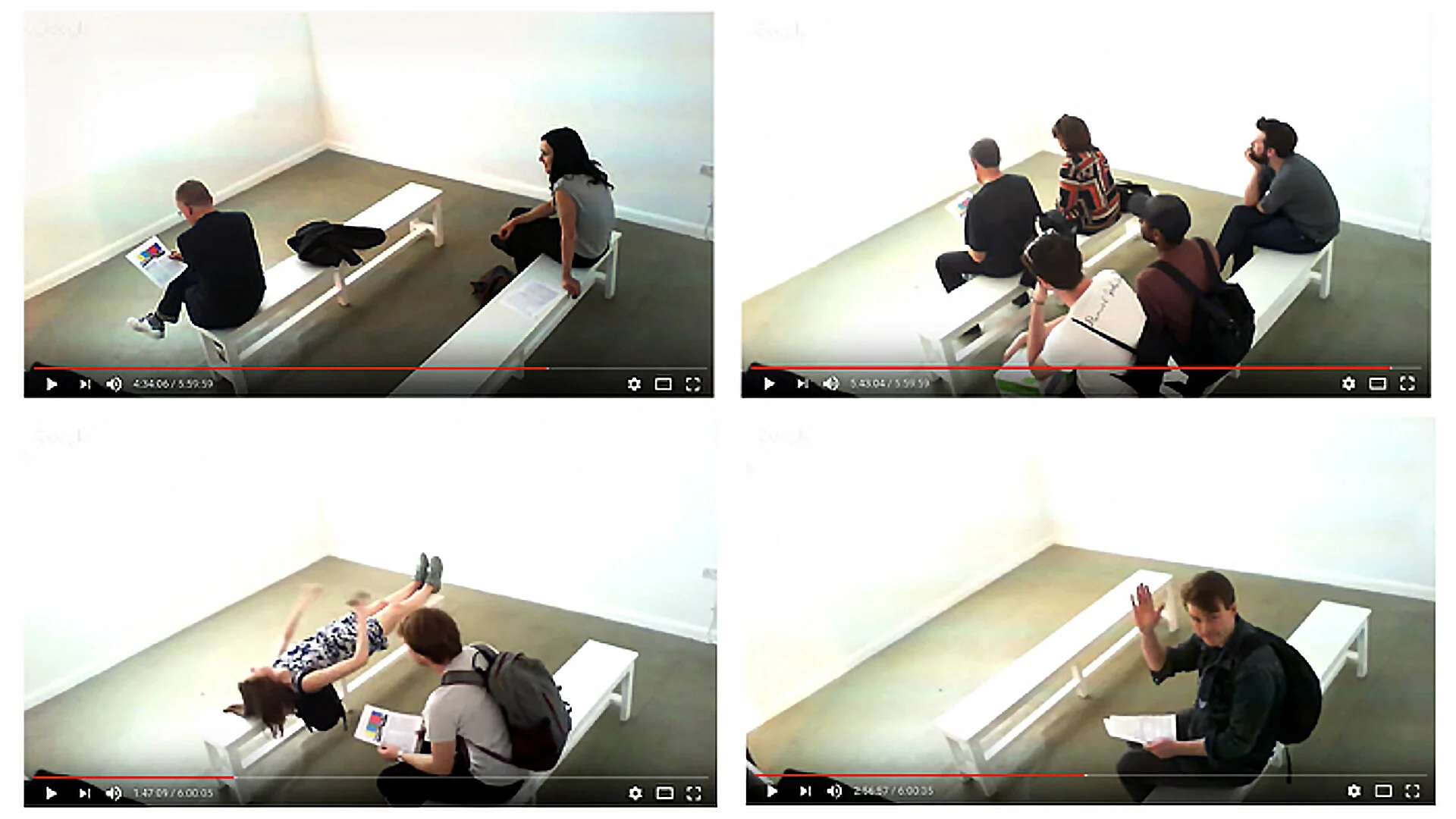
The Narrator is Present is improvised. Performed live by a series of actors, watching audiences via a YouTube Livestream.
With DYCP funding, I will be using system-based technologies, motion tracking and coding to create genuinely auto-responsive artworks for the first time.
Narrating the Barbican (2013)
performance, 20 mins
Narrating the Barbican explores visibility and surveillance in public spaces, bringing together audio narration, immersive theatre and relational aesthetics in a promenade performance that moves throughout the foyers and public spaces of the Barbican. Following the movements of 'a women in a blue dress and half worn-out shoes', her engagement with the Barbican is narrated via the public address system as she walks, listens, and plays with the building. In doing so, the Barbican itself is narrated and mapped, forming an alternative documentation of an iconic space.
Here, in the video adaptation of the piece, the absence of environmental sounds and views of the building allows the space to remain largely imagined, creating a cerebral map of the space and its soundscape.
Live audiences were able to experience the work in several ways. Firstly, as a performance, following the woman as she moves throughout the building. Secondly, as an audio narrative, heard throughout the Barbican's foyers via the public address system. And, thirdly, in fleeting moments, listening to the narration while catching glimpses of the woman as she passes by. This approach also allows audiences to join half-way through, using the audio narrative to locate the woman within the space.
This work was created in residence at the Barbican throughout August 2013 as part of Hack the Barbican, London’s biggest ever experiment in cross-disciplinary collaboration, bringing together artists, technologists and entrepreneurs, seeking to explore new boundaries and reinterpret one of the world’s great cultural centres.
The Narrator Is Present (2017)
performance, audio, livestream, duration variable
The Narrator is Present is an immersive audio work, with narrative ambiguity and a sinister underbelly. It explores visibility and surveillance in public spaces, social politics, and the ways rhetoric and storytelling can be manipulated by others. It considers the ambiguity between fiction and reality, the real and the unreal, the known and the imagined. How can we distinguish fictional narrative from truth among the multitude of disembodied voices on the Internet? Who is it that is speaking to us and what do they want?
As visitors enter the gallery, an unknown narrator describes their actions within the gallery. The narrative may be an accurate documentary of real-life events or the narrator may stray into fiction - sometimes playful, sometimes troublingly divisive in nature. Derived from the artists interest in the dislocated relationship of image, sound, and phenomenology, Ballard seeks to question our relationships with people, places, and objects, and the shifting meanings of time, presence, and liveness in a technology mediated world.
Existing simultaneously in the gallery and online, the work explores the dualistic experiences of the virtual and the physical, and the ways in which these two spaces contribute to a single reality. Audiences are being watched, potentially around the world. Will audiences choose to protest, play along, or simply observe?
Streamed every day of the exhibition during opening hours.
Installation view: Wasted Labour at the Nottingham Castle open, 2015.
Wasted Labour (2015)
video installation, audio, looping
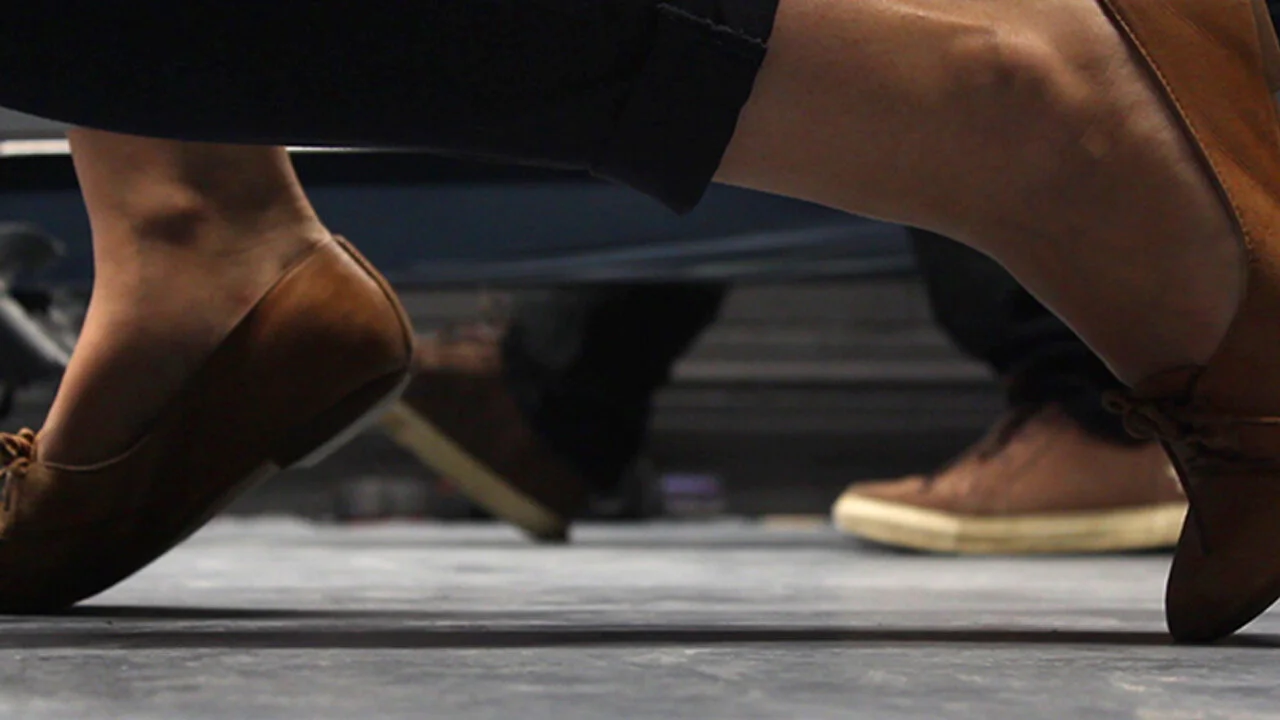
Wasted Labour examines systems designed to optimise productivity and physical labour of the body. Created in collaboration with artist Dr Martin Lewis, in-residence at Summer Lodge, Nottingham, UK.
Here, the artists use rowing machines as a tool for performing choreographed movements for legs and feet. Their movements are accompanied by a hypnotic soundtrack of the rowing machine moving back and forth, evoking a nostalgic sense of industrial machinery and factory work.
Part of an ongoing series of works in which Ballard & Lewis explore the use of apparatus, designed for leisure and fitness, to reflect upon physical labour and its relationship to the body.
*** Winner of the Main Prize at the Nottingham Castle Open 2015 ***
Judges: Deb Covell, Rob Dingle, Kerry Harker, and Poppy Woodeson (formerly known as Ben Woodeson)
Still: Wasted Labour, 2015.